
The work Cannon was founded on
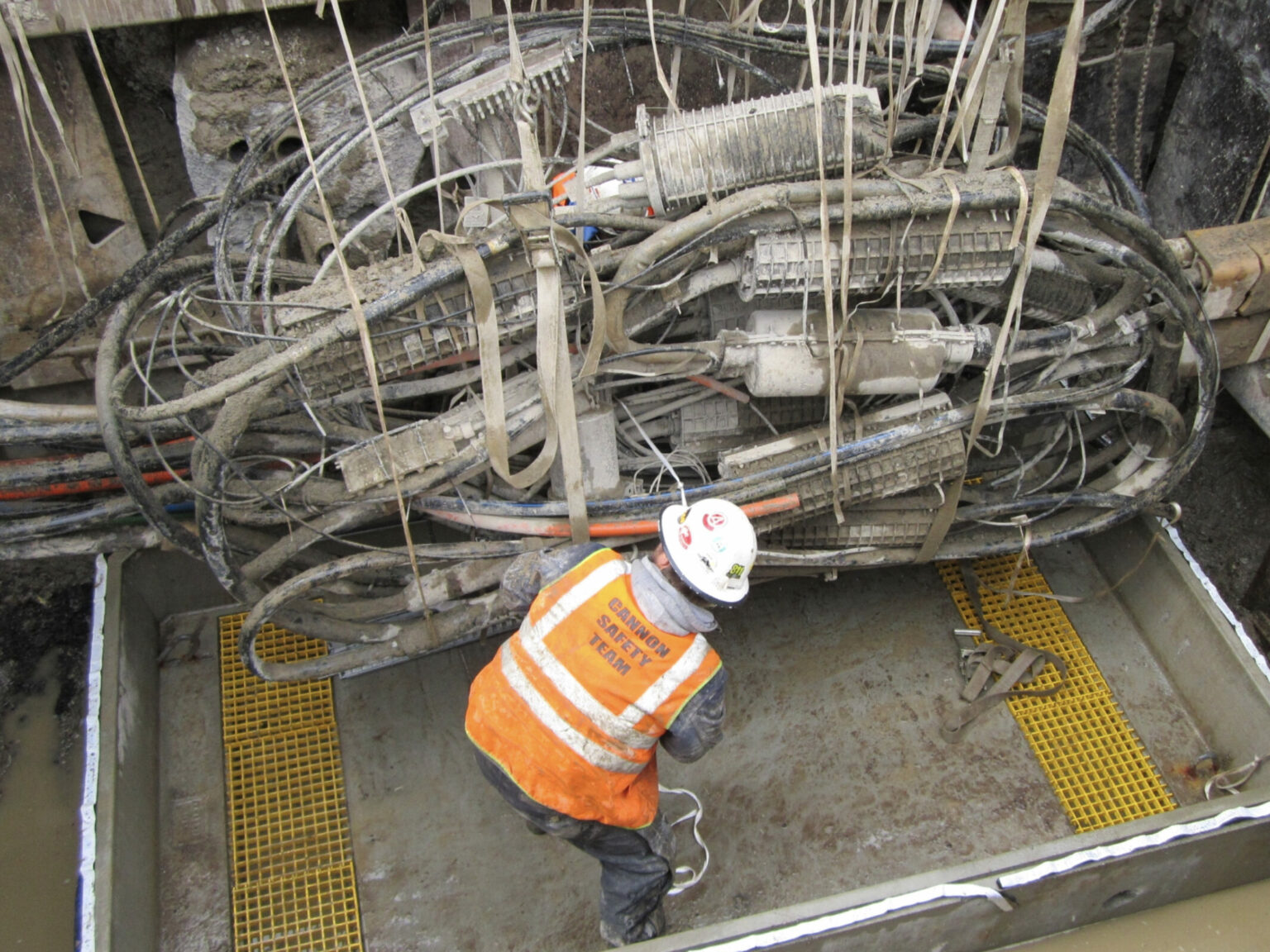
Cannon engineers, builds, splices and tests the networks that carry communication, aerial and underground, from a long haul backbone across a state to the drop at the premise. Engineering, drilling, placement, splicing and testing are all Cannon crews, which is what lets a carrier hand over a route rather than manage four contractors across it.
Aerial, underground, splice and test
Aerial plant
Aerial fiber and coax, make ready, pole installation and removal, strand and lash, overlash, transfers and joint use coordination on utility and carrier poles.
Underground plant
Duct banks, manholes and vault placement, directional drilling, trenching, rock sawing, cable plowing, asphalt and concrete restoration, and telecommunications huts and cabinets.
Cable placement
Copper and fiber cable placement by pull, blow and plow, from the backbone through distribution to the drop, with GPS as-built services on every route.
Splicing
Loose tube and ribbon splicing, FTTx splicing, high count copper splicing, emergency repair splicing and terminations by Cannon splicers.
Testing and troubleshooting
OTDR testing, certification and advanced fiber optic troubleshooting, with the trace delivered with the closeout package.
Networks
Middle mile and long haul backbone, FTTP, FTTH, FTTN, PON and multiple dwelling unit builds, data center and central office construction, and cable reclamation.
One contractor from route design through splice and test
Cannon's engineering group carries pre-survey and design-build, site engineering, CAD drawing and permitting, including environmental approvals, easements, pole attachment and jurisdictional permits. Construction follows under the same project manager, and the route closes out with as-builts, test records and documentation the carrier can hand to operations.
Crews that work in rock are a standing capability rather than a subcontracted exception, which matters on routes through solid and cobble formations, river and wetland crossings and urban corridors that have to thread existing utilities. Inside plant scope on the same contract is delivered by BICSI certified technicians under staffed RCDDs; see inside plant.
Carriers and communities that bring the work back
Comcast
Master service agreement in Washington since 2017, building new aerial and underground plant for fiber and coax by bore, trench, open cut and strand placement, with 165+ miles engineered and 3,520+ homes passed to date.
Intermountain Infrastructure Group
Quincy to Spokane long haul route, 195 miles, with 1,032,035 feet bored and plowed and 825 vaults set.
Astound Broadband
MDU and antenna program across Puget Sound and Portland since 2016, more than 300 buildings including 454 units at Onni Towers.
Crown Castle Fiber
Program since 2018 across Puget Sound and the Phoenix metro, continuing with Zayo and Arium Networks.
Colville Confederated Tribes
Fiber to the home through NoaNet: 170+ miles, 2,200+ homes and 2,000+ pole attachments.
Yurok Telecommunications
Power, engineering design and project management on the Yurok Reservation, three tower sites across an 8+ mile route.
Why carriers contract the whole route
- One contractor from route design through splice and test, rather than engineering, drilling, placement and splicing across four vendors.
- Permitting carried in house, including environmental, easements, pole attachment and jurisdictional approvals.
- Crews that work in rock, with owned drills, plows and excavators and the civil crew for pits, vaults and restoration.
- Federal and public work delivered with certified payroll, badged crews and documentation to the owner's standard. See federal services.
- Damage prevention to Common Ground Alliance best practice and Gold Shovel Standard; the full program is on the safety page.
- As-builts, OTDR traces and closeout packages in the format operations can use, documented in Procore. See quality.
Have a route to build?
Send the design, the KMZ or the idea. Cannon will come back with a self-performed plan from engineering through splice and test.